
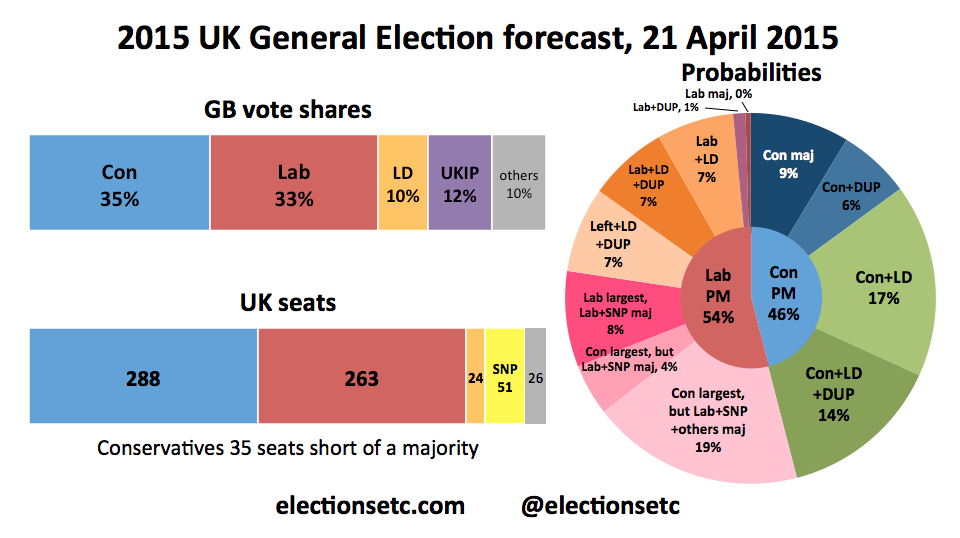
Our model now gives a 7% chance that the Conservatives will be the largest party but could only form a majority with the support of all of the Lib Dems, the DUP and UKIP. But the Lib Dems would also be able to form a majority with Labour and the SNP. In our central forecast, the Tory-led group would have 325 seats while the Labour-led group would have 338. Continue reading Which way would the Lib Dems go?
Forecast update: 21 April 2015
Arguments and prospects for tactical voting
by Stephen Fisher
It has been reported that David Cameron called for tactical voting in The Sunday Times today (e.g. here and here). He didn’t. What he said was:
“So if you are considering voting Ukip or Lib Dem, I urge you to think of the chaos of a weak Ed Miliband, propped up by Nicola Sturgeon demanding ever more borrowing and more taxes. Only a Conservative vote in your local constituency will keep Ed Miliband and the SNP out and secure Britain’s future.”
This is a blanket call for all UKIP and Lib Dem supporters to vote Tory. Not only is there nothing tactical in this, but the final claim is both false and contrary to the logic of traditional tactical voting. Continue reading Arguments and prospects for tactical voting
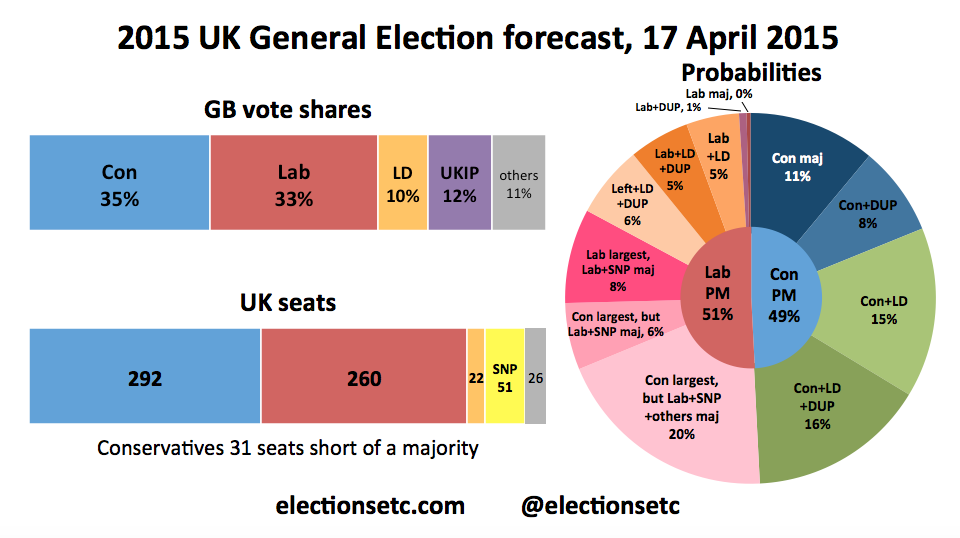
Forecast update: 17 April 2015
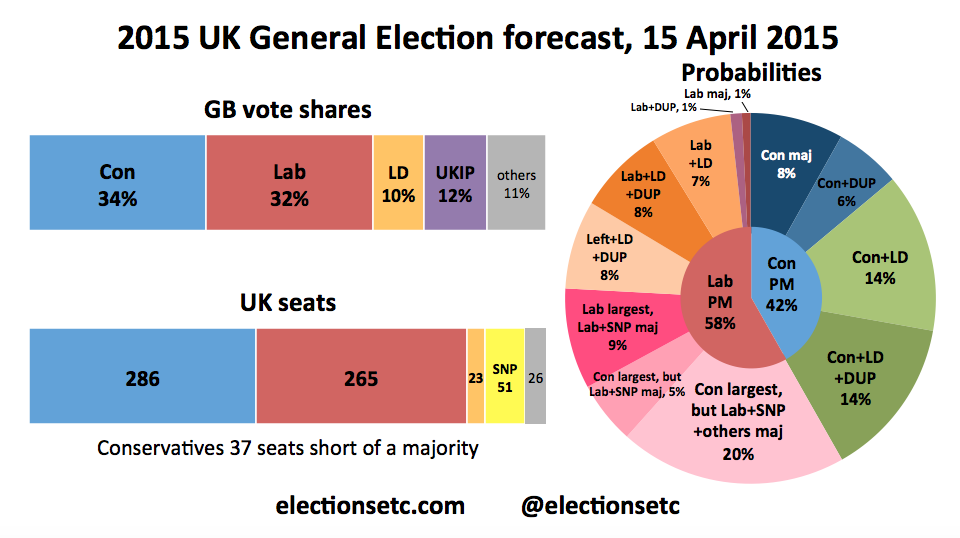
Forecast update: 15 April 2015
Forecast update: 10 April 2015

Forecast update: 3 April 2015

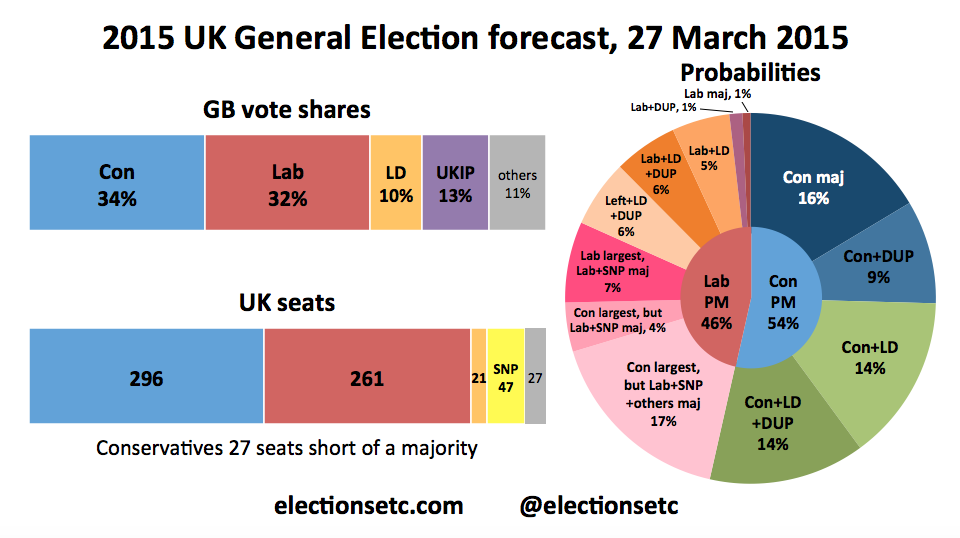
Forecast update: 27 March 2015
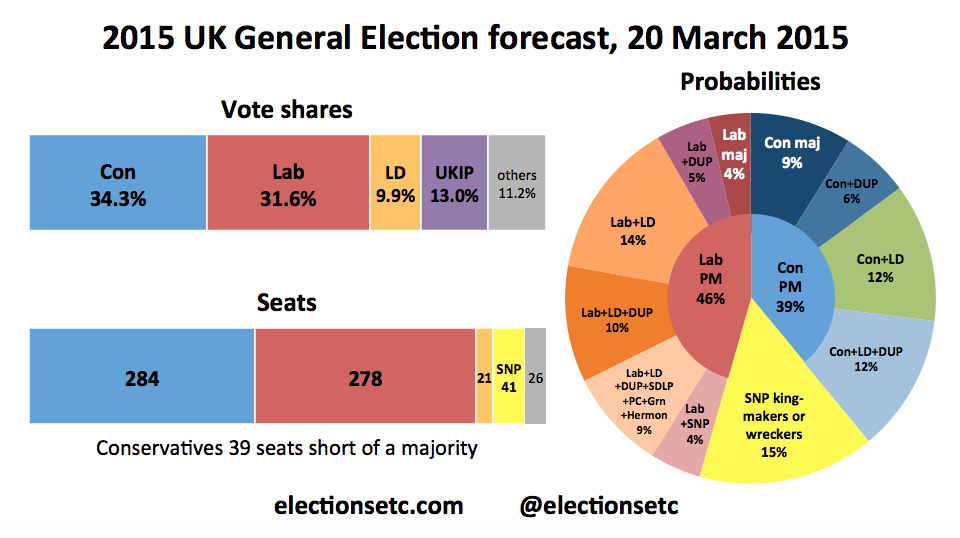
Forecast update: 20 March 2015
Liberal Democrats after the election: a left of centre party which should be able to work more easily with Labour than the Conservatives
by Stephen Fisher and Eilidh Macfarlane
At the 2010 election Liberal Democrat MPs, members and voters were all more social liberal than economic liberal (using both terms in their traditional British not American sense) i.e. left rather than right of centre. But their leaders, especially Nick Clegg, Danny Alexander and David Laws are further to the right than most of their party. In his book 5 Days in May, Andrew Adonis goes so far as to argue that the Liberal Democrats formed a coalition with the Conservatives rather than Labour not because of the parliamentary arithmetic was considerably better but instead because Nick Clegg and David Laws especially were ideologically closer and personally warmer to the Tories than to Labour. Continue reading Liberal Democrats after the election: a left of centre party which should be able to work more easily with Labour than the Conservatives

